Meta | Using AI to diagnose support issues
Meta offers a premium support experience for on Instagram and Facebook branded as “Enhanced support,” whose key distinction includes access to a human support agent. Guided by UX research and company priorities, the premium support product team continually audits the enhanced support experience seeking opportunities to make foundational improvements. Our goal is to boost customer satisfaction (CSAT) for our audience of 15M users including Meta Verified subscribers, “creator” Teen Accounts and advertisers.
My role: I function as the lead content designer embedded with a Menlo Park-based premium support product team of engineers, product designers, product managers, product marketers and operations leads. I’m responsible for content strategy, information architecture and all product micro-copy. Before shipping, my work is carefully reviewed and aligned with international taxonomy, localization and legal partners. Additionally, to ensure consistency across hundreds of products and features, I’m responsible for seeking actionable feedback from designer peers and leaders in the Central Products sub-org (within which support design sits).
Problem: 48% of customers were misreporting their issues when they reached out to chat with support. This figure was based on reports from support agents who would devote the beginning of their chats with customers to helping identify the correct issue. Customers choose from a fixed menu of common issues before engaging in support chats; the possibility of user error is high.
Collaborators: Product designer / Product and content design directors / Engineer lead / UX researcher / Project manager
What the research told us:
- Customers felt limited by the options presented when we offered them a menu of answers.
- A high percentage of customers were comfortable interacting with AI if it would help them resolve certain kinds of issues faster.
- Conversational interactions increased customer satisfaction.
As a product team, our goal was to ship a support interaction that would be conversational, automated and capable of collecting a stronger signal of a customer’s needs in that moment.
Our engineers were highly flexible and communicative throughout the development process. Essentially, our only constraints were working within the Meta design system ensuring our patterns could be replicated on both Facebook and Instagram platforms.
Solution: Working with my product design partner, we created an AI diagnosis flow that would allow users to articulate problems in their own words while AI analyzed their input and matched it to known user issues in real time. This would serve to improve the accuracy of user issue diagnosis while capturing more signal from users about their problem before they reach a live agent.
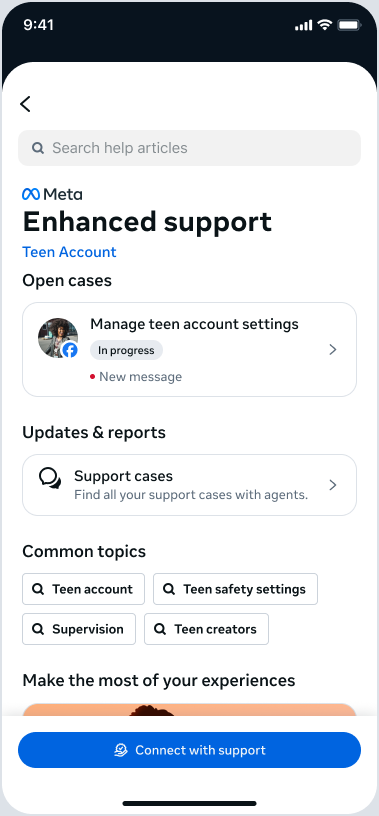
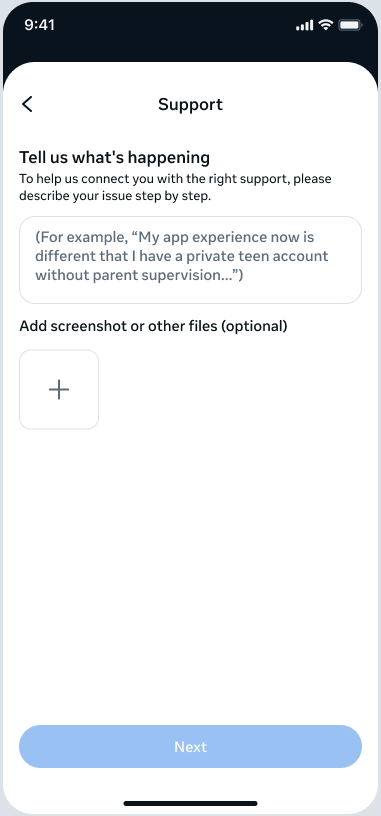
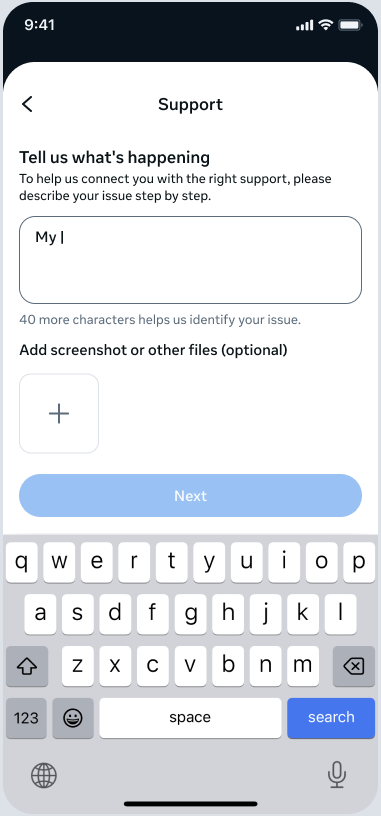
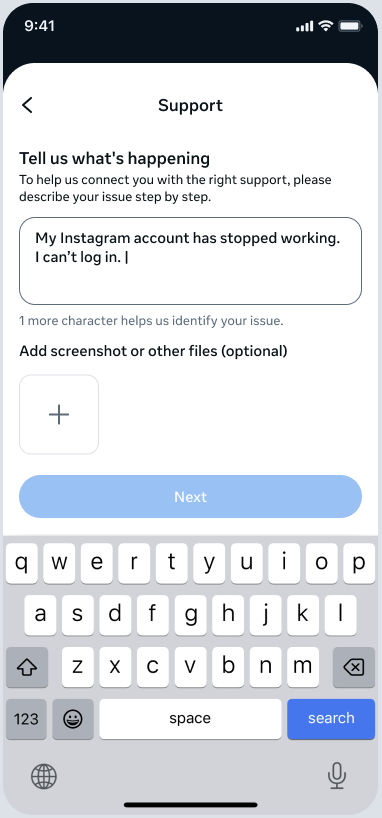
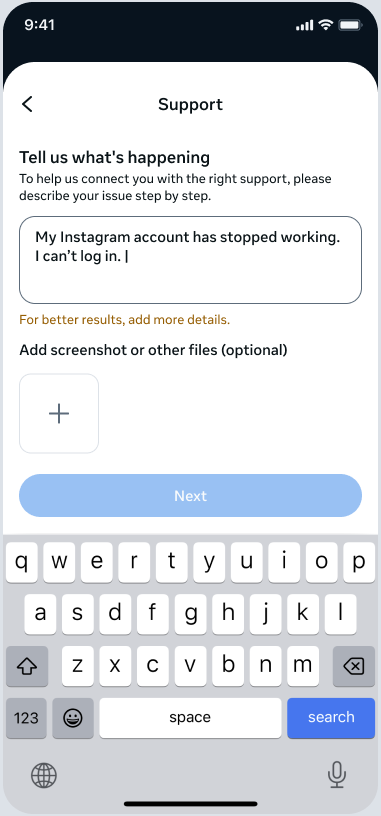
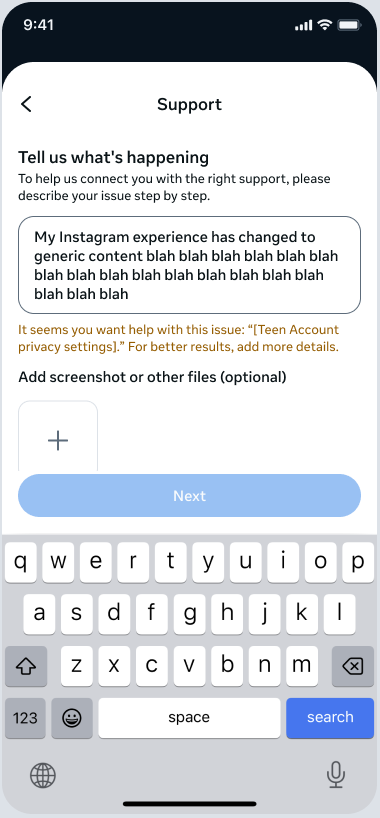
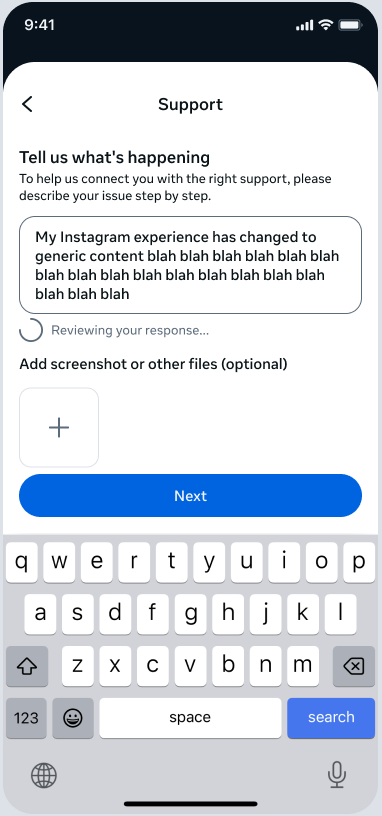
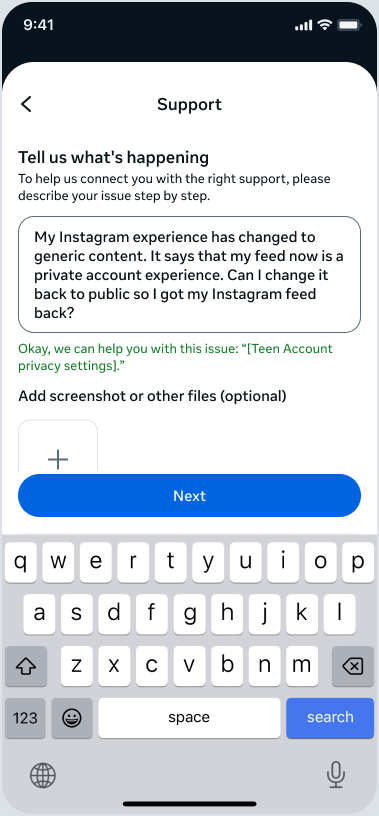
I developed a micro-copy pattern below the free text field designed to increase the likelihood of an accurate diagnosis. Each string would serve to keep the user either passively or actively informed of a stage in the diagnosis process:
- Establishing a character minimum for responses to discourage junk replies.
- Encouraging users to add detail that would improve the likelihood of matching.
- Analyzing response content.
- Confirming a matched issue.
After a successful match, we would serve users with existing content that would guide them to resolve their issue themselves. If the resolution offered was not relevant or if the user had somehow not matched with the right issue, they could tap the “Contact us” CTA below and proceed to chatting with an agent.
Additionally, we wanted to give users the chance to get help with a different profile than the one they were reaching out from (an increasingly common need for creators with multiple accounts). Due to privacy concerns around auto-populating profiles from other Meta platforms, I developed an instructional screen that would help users find another profile URL to share with the support agent.
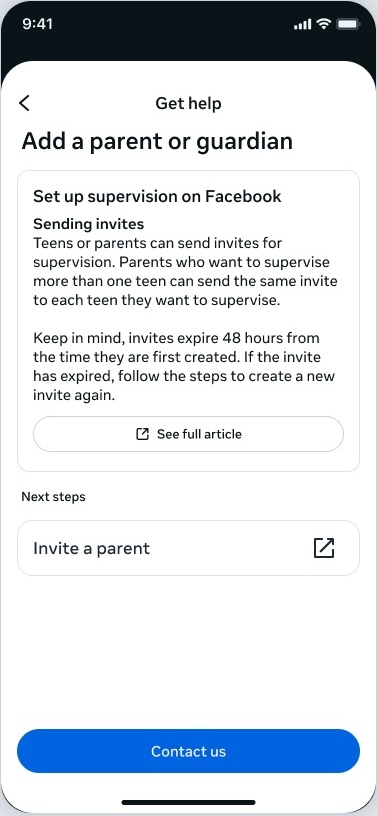
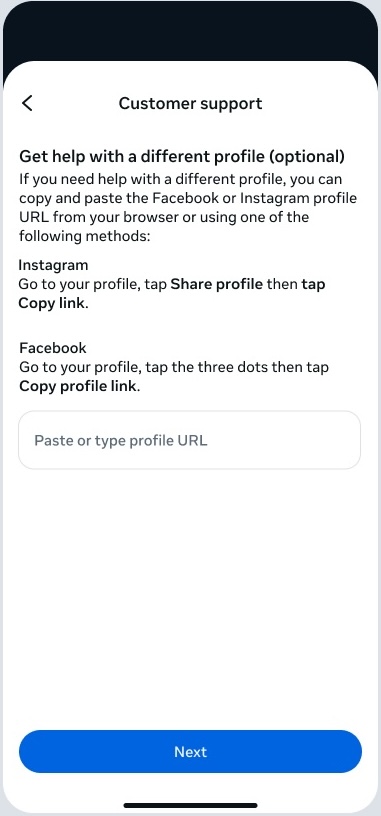
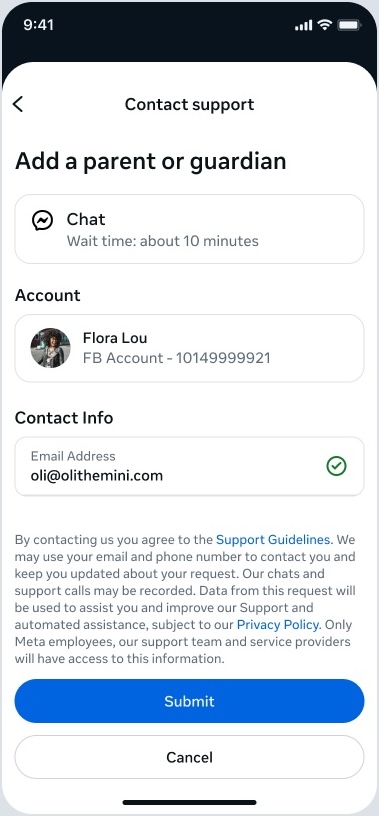
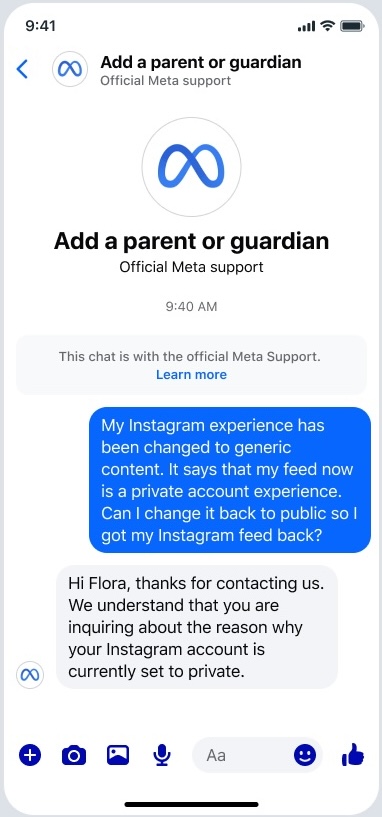
The Result: Our solution improved the accuracy of support issue diagnosis by 12%. Over the course of a month this amounted to roughly 48k cases accurately identified by the time users reached an agent.
This delta also led to 7% increase in customer satisfaction, our primary metric.